
Breathing Mechanics and Postural Neck Pain
There is plenty of information out surrounding the relationship between respiration and posture. In general, good breathing equals good posture and poor breathing equals poor posture. Often, a “chicken or the egg†debate can arise. Did prolonged postural dysfunction cause respiratory dysfunction? Or did the respiratory dysfunction lead to poor posture and movement mechanics? The goal of this article is to make sense of this dynamic relationship and provide a potential aid in improving both using a breath exercise.
Chronic Neck Pain and Poor Posture
Many of us have experienced annoying, devious neck pain that comes on seemingly out of nowhere. We often believe we have “slept wrong†because we just woke up with pain and tension. Maybe we are simply sitting to work at the computer, or even relaxing to our favorite show, and this pain creeps up suddenly.
Truthfully, the insidious onset of neck pain, likely has a source. One of the many possible sources is altered neck biomechanics for a sustained duration. You may have heard terms such as “stress neck†or “tech neck†used to describe pain from altered biomechanics. It seems tough to argue that the socialization of technology into our personal and work lives has a direct impact on our head, neck and shoulder positioning. We spend far too much time flexing our chin toward our chest as we stare down at the phone, or “turkey neck†our head forward while working on the computer. With altered biomechanics comes altered function. In these positions, muscles on the anterior (front) side of the neck are working harder and longer, taking over the job of our deep neck stabilizers. This can create a muscle imbalance and trigger a variety of different pain responses.
Dysfunctional Breathing
There are specific muscles on the front side of the neck which are accessory respiratory muscles. Meaning, they assist in expanding the chest and upper ribcage as we fill the lungs with a big breath. This built-in function is necessary and helpful in some cases; when exercising and pushing our aerobic capacity for example. However, in our daily life there is little requirement for this type of oxygen intake. We tend to rely on the accessory muscles far too often. We develop a shallow chest breathing pattern or an over-breathing pattern.

The above-mentioned patterns will commonly be referred to as breathing dysfunction when they are chronic. Sometimes this may be a result of deeper underlying respiratory conditions such as asthma, COPD, chronic bronchitis, or emphysema. More commonly dysfunctional breathing develops as a result of stress, anxiety, poor posture and poor breathing mechanics.
Relationship Between Breath and Posture
The relationship between the quality of our breathing mechanics and the quality of our static or dynamic posture is symbiotic. How does our breath become dysfunctional due to poor posture? Forward head position, slouched spine, and rounded shoulders engage those same accessory muscles involved in shallow chest breathing. This also restricts the lower ribcage from expanding in all direction and activating the diaphragm and intercostals, our primary breathing muscles. You can imagine how the opposite effect can occur. Poor breathing mechanics, whatever the cause may be, does not allow us to activate those primary breathing muscles. Therefore, we fall into poor biomechanics and rely too heavily on accessory muscles. It is a difficult cycle to break.
It is less important worrying about how you got to where you are, then focusing on what you can do to improve. In other words, who cares if the chicken or the egg came first, let us test both postural correction exercises and breathing exercises to see what works best. For the purpose of this article I will provide a practical breathing exercise to get the ball rolling.

Breathe Better, Feel Better
It takes a well-balanced plan of proper nutrition, sleep, lifestyle and quality movement to improve function or pain. Start with moving your breath in-and-out…
TRY THIS:
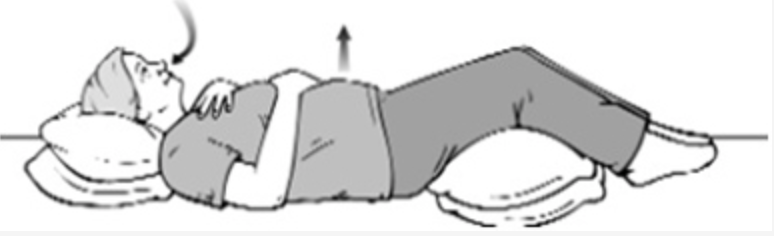
- Find a relaxing place and lay down on your back with your legs bent
- Place one hand on the belly, one hand on the chest
- Lightly close your lips and touch the tongue to the upper palate where it meets the teeth
- Breathe in the nose, out the nose
- Breathe into the belly, but not the chest. Feel the belly hand rise and fall as the breath does the work. Allow the belly and lower ribcage to expand and fall, but stop the breath before it passes the bottom of the sternum
- Breathe slow, breathe soft, and breathe smooth
- Notice how the air feels as it enters and exits the nose
- Slow that air flow down. This will feel uncomfortable, as if you want to take a deep rapid breath in. But try to prevent yourself from increasing the velocity of the breath in or out.
- As a general guide, think 4 seconds in and 6 seconds out. More importantly, make the breath out slightly longer than the breath in
- Set a timer for 3-5min a day. Before bed is a great time to practice.

There are many benefits to nasal breathing and diaphragmatic breathing outside of improving posture alone. Breathing through the nose increases nitrous oxide intake into the lungs and allows for more oxygen to enter the bloodstream. This promotes oxygen to the tissues for better tissue recovery. Breathing diaphragmatically through your nose with a slow, controlled tempo can activate the parasympathetic nervous system. This improves our response to stress. When we can incorporate this breathing pattern more and more into our daily life, research has shown improvements in heart rate, blood pressure, cortisol levels and recovery form injury. For more information on the benefits to this method of breathing check out the resources below.
Resources: